The Power of the Prompt
A Design Diary, on writing a question that does three jobs at once.
A while back, my friend Deanna got me thinking about exposition, about how a storytelling-game prompt can hand the storytellers a whole world without ever sounding like a lecture. I’d been treating exposition, character, and plot as three separate jobs: three things a good prompt had to take turns doing. Her way of looking at it knocked that idea loose for me. What if one question could do all three at once? That single shift reorganized the way I write prompts, and it’s the thing I most want to pass along here.
I’ve come to call it the tri-fold prompt. Nearly every prompt in a collaborative story game is reaching for one of three things: it tells us something about the world, it tells us something about who a character is, or it sets something in motion. The flat prompts manage just one. The ones I’m proudest of do all three in a single breath.
Here’s the trick I kept circling back to: a prompt does its real work in what it takes for granted, not in what it asks.
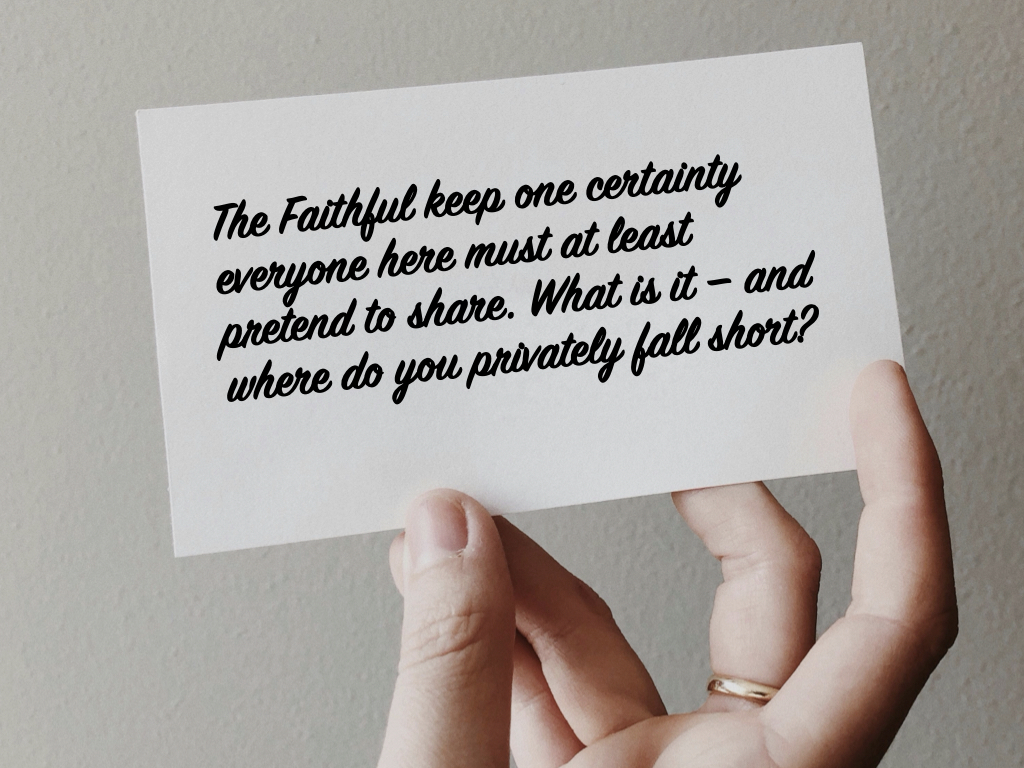
Ask a storyteller “what is your character like?” and watch them freeze on the blank page. But ask:
“What did you promise the people we left behind that you already knew you couldn’t keep?”
And a whole world arrives with the answer. There are people back home. There was a leaving. And this person made a promise in bad faith. You only asked for one thing, the broken promise, but to answer it at all, the storyteller has to accept everything else that came riding in with the question. One small ask; three jobs done.
If you want to test a prompt of your own, here’s a little habit I’ll share. After I write one, I jot three lines beneath it and try to fill each from what answering would make true: What does it establish about the world? What does it pin down about the person? What does it set in motion? If a line comes up empty, the prompt has a hole, and the fix is almost never to pile on another question. It’s to deepen what the prompt already assumes, until the missing piece falls out of the answer on its own.
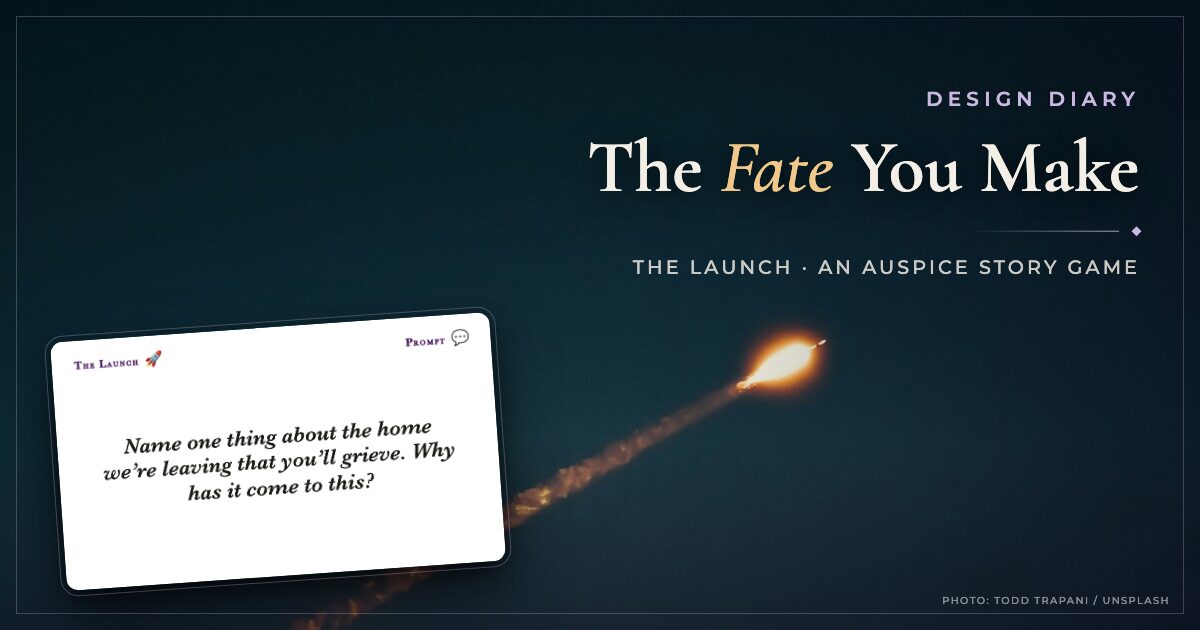
I lean on this constantly in my own designs. In The Launch, a game about a crew leaving a dying world, one card asks:
“A seat aboard cost more than most could pay. What did you give up — and who decided you’d be the one to pay it?”
The world (seats are scarce and dearly bought), the person (what they sacrificed, and whether the choice was even theirs), and the tension (a debt that may yet come due) all arrive together. And in In Confidence, a game of whispers in a grand hotel where one of your own circle is rumored to hold a poison pen, a card turns to the accused:
“A secret only you were trusted with is suddenly on every tongue. Tell us how it got loose — and let us wonder whether you’re telling the truth.”
Same three jobs, folded into one question: a leaked secret, a character put on the spot, a suspicion tightening.
One hard-won caution, because this is the kind of power that’s easy to overuse. Since the magic lives in what you assume, you can quietly assume too much. The line I try to hold is this: presume the situation a character is in, never the verdict on who they are. “What did you do in the war that you’ve never told anyone?” lets a storyteller make their past shameful or noble; they still hold the pen. “What war crime are you hiding?” takes the pen out of their hand. Edgy is fine. Foreclosed is not. The best leading questions walk right up to that line and stop.
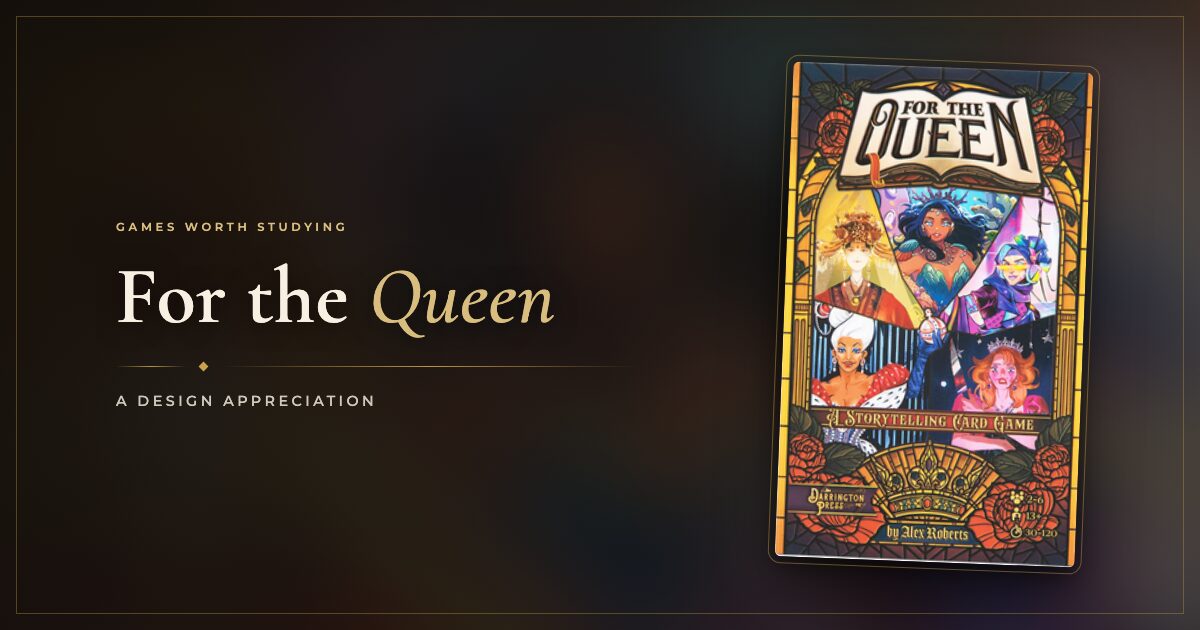
I owe this whole thread to Deanna, who started it, and to the designers whose games taught me the shape of a good prompt: Alex Roberts’ For the Queen most of all, along with A Quiet Year, Alice is Missing, and Dialect. (There’s even a small study out of a behavior-analysis lab1 suggesting that the richer and more thematic a prompt is, the longer players take to answer it. That matches what I see at the table, where those are the prompts people enjoy most.)
So let me turn it over to you: what’s the best prompt you’ve ever been handed at a table, the one question that gave you a whole world to step into? I’d love to hear it.
The best stories are the ones we tell together.
-
The Effects of Prompt-Type on Mand Production Within a Tabletop Roleplaying Game (2025). [Master’s thesis, St. Cloud State University]. Reynolds, Sara A. Retrieved 2026-07-01 from The Repository @ St. Cloud State: https://repository.stcloudstate.edu/cpcf_etds/122/. ↩